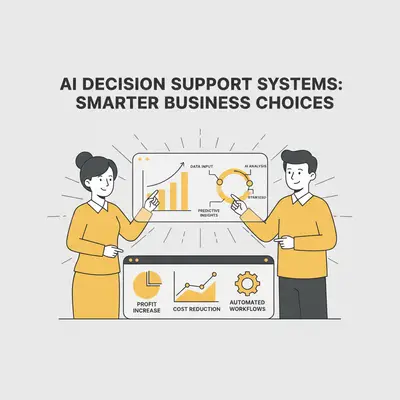
AI decision support systems (DSS) are transforming how businesses make decisions by analyzing data, predicting outcomes, and recommending actions in real time. Unlike older systems that only provide historical data, AI-powered tools actively process vast datasets, uncover patterns, and offer actionable insights. This shift allows businesses to make faster, more accurate decisions across areas like sales, operations, and finance. Here's a quick breakdown of what makes them effective:
- Predictive Analytics: Forecast outcomes using past data to move from reactive to proactive strategies.
- Real-Time Data Processing: Work with live data for instant responses to changes.
- Scenario Modeling: Test different strategies to evaluate potential outcomes and risks.
- Risk Assessment: Identify and manage risks with advanced algorithms.
- User-Friendly Interfaces: Simplify insights for non-technical users.
AI DSS enhances decision-making by reducing errors, speeding up processes, and ensuring consistency across departments. While they automate complex analysis, human expertise remains essential to provide context and final judgment. For businesses ready to integrate AI DSS, starting with a focused pilot project and ensuring proper training can lead to measurable improvements in efficiency and performance.
What Are AI Decision Support Systems?
Definition and Purpose
Let’s dive into the concept of AI decision support systems and their role in modern decision-making processes.
AI decision support systems use artificial intelligence and machine learning to analyze data, evaluate choices, and provide actionable recommendations. Unlike older systems that simply display historical data or basic reports, these AI-driven tools actively process information, detect patterns, and suggest the best course of action. Their goal? To cut down on guesswork and speed up decision-making.
These systems pull data from various sources - like sales records, customer interactions, market trends, and operational metrics - and use advanced algorithms to generate insights. What would traditionally take hours or days of manual analysis is now delivered in just minutes, thanks to their automated approach.
One standout feature of AI decision support systems is their ability to handle massive datasets. They can process thousands of data points at once, uncovering relationships and subtle correlations that would likely go unnoticed by a human. This turns decision-making into a more evidence-based process, leaving less room for subjective judgment and more space for data-driven choices.
While these systems handle the heavy lifting of data analysis, they don’t replace human decision-makers. Instead, they complement human expertise by automating the analytical process, allowing leaders to focus on strategy, ethics, and the broader implications of their decisions.
Core Features of AI-Powered DSS
AI decision support systems come with a range of powerful features that elevate them above traditional models:
- Predictive analytics: This is the backbone of AI DSS, using historical data and machine learning to forecast outcomes. Whether it’s planning inventory or anticipating market trends, this feature helps businesses move from reactive to proactive strategies.
- Real-time data processing: Unlike traditional systems that rely on outdated data, AI-powered tools work with live data streams. This allows businesses to respond instantly to changes, whether it’s a market fluctuation, a shift in customer behavior, or an operational hiccup.
- Scenario modeling: Decision-makers can simulate various strategies to see potential outcomes before committing resources. By testing different scenarios, businesses can reduce risks and make more informed strategic plans.
- Risk assessment: AI systems evaluate multiple risk factors simultaneously, assigning probability scores and identifying potential impacts. They flag high-risk situations and suggest ways to mitigate those risks, helping companies avoid costly errors.
- Natural language interfaces: Many AI systems are designed with user-friendly interfaces, allowing non-technical users to interact with them using plain English. This makes AI insights accessible to managers across departments without requiring advanced technical skills.
How AI Improves Traditional DSS Models
AI decision support systems build on the limitations of traditional models, offering transformative improvements.
Older decision support systems were essentially advanced reporting tools. They could organize data into charts and reports, but the burden of interpreting that data fell entirely on humans. This process was not only time-consuming but also prone to inconsistencies, as results depended heavily on the individual analyzing the data.
AI changes the game by introducing autonomous analytics. These systems don’t just display data - they interpret it. For example, while a traditional system might show a drop in sales, an AI-powered system goes further by explaining the reasons behind the decline, predicting whether the trend will continue, and suggesting specific actions to address it.
AI systems also excel in handling complex scenarios with multiple interrelated variables. Advanced algorithms, like neural networks, enable them to model intricate dynamics, such as pricing strategies influenced by demand, competition, seasonality, and customer behavior. Traditional systems often struggle with this level of complexity.
Another advantage is automated visualization, which transforms raw data into interactive, dynamic displays. Decision-makers can explore trends, drill down into specific details, and uncover insights through visual tools that make the data easier to understand.
Perhaps one of the most impressive aspects of AI DSS is their ability to learn and adapt. These systems continuously refine their models based on new data and outcomes. If a recommendation proves successful, the system reinforces that approach. If it misses the mark, it adjusts. This self-improving capability ensures the system stays relevant and effective as conditions evolve.
Finally, AI systems are built for speed and scalability. They deliver insights in seconds, enabling real-time decision-making even in fast-paced environments. Plus, they scale effortlessly, supporting large teams across an organization without losing performance, ensuring consistent and reliable analytical support for everyone involved.
AI in Business Intelligence and Decision Support Systems | Exclusive Lesson
Benefits of AI Decision Support Systems for Businesses
AI decision support systems are transforming the way businesses tackle challenges like slow decision-making and unpredictable risks. By automating data analysis and delivering actionable insights, these tools empower companies to make quicker, smarter decisions that directly enhance performance.
Faster and More Accurate Decisions
In business, speed matters. AI decision support systems drastically cut down the time needed to analyze data while maintaining precision. Unlike traditional methods, which rely on manual data gathering and are prone to errors, AI processes thousands of data points instantly, enabling decisions rooted in real-time, accurate insights.
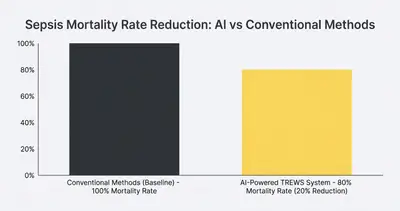
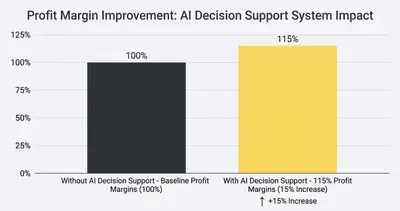
Over two-thirds of executives cite improved decision-making as the leading benefit of advanced AI systems [1]. Take healthcare as an example: Johns Hopkins' TREWS system identifies sepsis up to six hours earlier than conventional methods, improving patient outcomes and reducing mortality rates by 20% [1]. Similarly, a global retailer adopted an AI-based decision support system to refine its pricing strategies, boosting profit margins by 15% [2].
Improved Predictive and Risk Management
AI decision support systems allow businesses to move from reacting to problems to anticipating them. By analyzing historical trends and spotting patterns, these systems can predict consumer demand, helping optimize inventory levels, or enable predictive maintenance in manufacturing, cutting down on costly downtime [1][2].
In risk management, AI shines by assessing complex factors in real time. It detects anomalies and forecasts potential threats like credit defaults, market fluctuations, or cybersecurity breaches [1]. For instance, a logistics company leverages AI to predict delivery delays using weather and traffic data, enabling proactive scheduling adjustments to minimize disruptions [2]. In finance, AI evaluates credit risks and identifies at-risk customers, helping businesses refine retention strategies. Notably, 79% of corporate strategists believe that AI, automation, and analytics will shape business success within the next two years [1]. Additionally, AI’s ability to simulate different scenarios allows decision-makers to test strategies and assess risks before committing resources.
Consistency and Scalability Across Departments
One of the standout advantages of AI decision support systems is their ability to standardize decision-making across an entire organization. Unlike manual analyses, which often lead to varied interpretations, AI delivers consistent insights, ensuring uniformity regardless of team size or structure.
This consistency enhances collaboration across departments like sales, operations, and finance, while also maintaining high decision-making standards as companies grow or enter new markets. For businesses aiming to tap into these benefits, tools like those from Evalics offer scalable AI solutions tailored to evolving needs. These operational efficiencies pave the way for seamless integration of AI decision support systems into any business framework.
How to Implement AI Decision Support Systems
Implementing AI decision support systems requires thoughtful planning and execution to ensure your investment delivers measurable results. The key is to approach adoption with a clear strategy, focusing on aligning the technology with business goals, ensuring technical compatibility, and preparing your organization for change.
Assess Your Business Needs and Goals
Before diving into AI decision support systems, take a step back and evaluate your current decision-making processes. Where are the inefficiencies? Are sales forecasts consistently off? Do supply chain disruptions catch your team off guard? Is financial risk assessment taking too long? Pinpoint specific pain points that are slowing things down or leading to errors.
Map out your workflows to identify bottlenecks. For example, a retail business might discover that pricing decisions are based on outdated spreadsheets updated weekly instead of using real-time market data. Speak with department heads in sales, operations, and finance to get a full picture of the challenges they face daily.
Once you've identified these issues, set clear, measurable goals for success. Instead of vague objectives like "improve decision-making", aim for something concrete, like "reduce inventory forecasting errors by 25%" or "cut financial reporting time from two weeks to three days." These specific targets not only guide your system selection but also help measure ROI after implementation.
Consider the impact scale of each problem area. Focus on areas where AI can make a real difference. For instance, a logistics company might prioritize optimizing delivery routes over managing office supplies because the former affects thousands of deliveries daily and has a much larger effect on revenue and customer satisfaction.
Once your objectives are clear, the next step is ensuring the technology integrates smoothly with your existing systems.
Integration and Compatibility Considerations
Seamless integration is crucial for AI decision support systems. The technology should enhance your operations, not create new silos or complexities.
Start by auditing your data sources. AI systems rely on high-quality data pulled from various platforms - CRM systems, ERP software, cloud storage, and more. Check where your critical business data resides, how often it’s updated, and whether access permissions are in place. If customer data is in one system and sales data in another without integration, you’ll need to address this before AI can provide meaningful insights.
API availability and integration capabilities are essential. Look for solutions with built-in connectors for your current software stack. Systems that require custom coding for every data connection can drain resources and delay implementation.
Pay close attention to data security and compliance, especially if you’re in a regulated industry like healthcare or finance. Ensure the AI system meets your industry’s standards for encryption, access controls, and audit trails. It should align with your existing security framework to avoid compliance headaches.
Evaluate your infrastructure capacity as well. Some AI systems operate in the cloud, while others require on-premises servers. Cloud-based options often offer faster deployment and lower upfront costs, but they may raise concerns about data sovereignty. Assess whether your current IT setup can handle the processing demands or if upgrades are necessary.
For example, platforms like Evalics are designed to integrate seamlessly with existing tools, minimizing disruptions and allowing for real-time insights. The goal is to enhance your workflows, not replace everything you’ve already built.
Training and Change Management
Once the technical aspects are sorted, the focus shifts to your team. Even the most advanced AI systems can fail without proper user adoption and change management. Resistance to change is a common hurdle, especially if employees worry AI might replace their jobs or undervalue their expertise.
Tackle these concerns head-on by clearly communicating the purpose of the technology. Emphasize that AI is a tool to help employees focus on strategic tasks, not a replacement for their roles.
Develop tailored training programs for different groups. Executives need to understand high-level insights and strategic implications, while operational staff require hands-on training for daily use. Avoid generic, one-size-fits-all sessions that leave some users overwhelmed and others underprepared.
Training should cover more than just how to use the system. Teach employees when and why to rely on AI recommendations. Help them interpret AI-generated insights, understand confidence levels in predictions, and know when human judgment should take precedence. This builds trust and ensures employees see AI as a tool to enhance decision-making, not something to follow blindly.
Identify departmental champions - early adopters who can guide their colleagues through the transition. These advocates often resonate more with peers than top-down directives and can highlight practical issues that formal training might overlook.
Plan for ongoing support after the initial rollout. Schedule regular check-ins during the first 90 days to address questions, gather feedback, and refine workflows. Provide accessible resources like documentation, video tutorials, and quick-reference guides. Consider setting up a dedicated support channel to help employees without disrupting their work.
Monitor adoption metrics to identify gaps. If certain features are underused or specific teams lag in adoption, investigate the reasons. Sometimes, resistance stems from legitimate workflow challenges that require system adjustments rather than more training.
Success isn't just about how quickly you deploy the system - it's about sustained usage and better decision-making over time. Investing in proper training and managing organizational change ensures long-term ROI and user satisfaction.
Practical Applications of AI Decision Support Systems
AI decision support systems bring speed, precision, and scalability to the table, offering real-world improvements across essential business operations.
Sales and Marketing Optimization
Sales teams juggle customer behavior, market trends, and competitive pricing every day. AI decision support systems simplify these complexities by identifying subtle patterns and trends.
For instance, AI-driven demand forecasting uses historical data and external factors like seasonality or economic shifts to help businesses adjust inventory and staffing in advance. Another standout feature is adaptive pricing - AI monitors competitor pricing, inventory levels, and customer demand to suggest pricing strategies that align with market conditions.
Customer segmentation also becomes more refined with AI. Instead of relying on broad categories, AI digs into purchasing habits, browsing behaviors, and campaign responses to identify smaller, highly specific customer groups. This enables marketing teams to craft personalized campaigns. Additionally, AI-assisted lead scoring helps sales teams focus on prospects most likely to convert, saving time and effort.
Platforms like Evalics integrate these features seamlessly into existing sales systems, pulling data from CRM tools and marketing platforms. This allows for instant, actionable recommendations, boosting both revenue and long-term growth potential.
Operations and Supply Chain Management
Operational efficiency is the backbone of any successful business, and AI decision support systems excel in this area.
In inventory management, AI predicts demand changes and suggests optimal stock levels for each product by considering supplier lead times, storage costs, and seasonal trends. This reduces the risk of running out of stock while avoiding overstocking.
AI also improves supplier performance analysis by tracking metrics like delivery reliability, product quality, and pricing trends. It alerts procurement teams to potential issues early, allowing them to manage relationships proactively and prepare contingency plans.
Route optimization and logistics planning benefit from AI's ability to analyze complex variables such as traffic, delivery windows, vehicle capacity, and driver schedules. These systems adjust plans in real time, ensuring on-time deliveries. Similarly, predictive maintenance and workforce scheduling help businesses align resources with forecasted demand, keeping operations smooth and cost-effective.
Financial Decision-Making and Risk Analysis
Financial decisions often demand a mix of speed and precision, and AI decision support systems are well-equipped to handle this balance. These tools not only enhance financial insights but also ensure that decisions align across the organization.
AI can establish baseline transaction patterns, flagging anomalies like unusual amounts or locations. This reduces the time it takes to identify and resolve potential fraud.
In cash flow forecasting, AI analyzes accounts receivable, payment schedules, seasonal trends, and economic data to provide accurate projections. This helps finance teams make smarter calls on investments, debt management, and daily spending.
For investment planning and portfolio management, AI processes large volumes of market data to uncover opportunities and highlight risks. It also improves credit risk assessments and budget variance analysis, streamlining compliance and reporting while cutting costs.
These examples show how AI decision support systems can deliver measurable benefits across various business areas. The key is to align these systems with your unique challenges and integrate them seamlessly into your workflows for maximum impact.
Best Practices for Using AI DSS Effectively
Making the most of AI decision support systems (DSS) means finding the right balance between technology, human judgment, and continuous improvement.
Combine AI Insights with Human Expertise
AI decision support systems excel at processing data quickly and consistently, but they’re not a replacement for human experience and intuition. The best results come when AI is treated as a helpful assistant rather than the ultimate decision-maker.
For instance, imagine a sales manager notices the system flagging a potential churn risk. A closer look might reveal it’s due to a planned inventory adjustment, not a service issue. Here, the AI raises the alert, but the manager’s insight prevents unnecessary action.
Similarly, a finance director might override an AI recommendation to cut costs in a department. The AI’s suggestion might be based on budget variances, but the director knows the variance stems from a planned equipment investment that will yield returns in six months. Without this context, blindly following the AI could lead to poor decisions.
Clear decision thresholds help maintain balance. For example, pricing changes under 5% could be auto-approved, while larger adjustments might require human review. Fraud alerts exceeding $10,000 might immediately escalate to an analyst, while smaller ones are queued for review. This approach is especially critical in high-stakes areas like credit risk assessments or investment decisions, where experienced professionals should always have the final say.
By combining AI’s capabilities with human expertise, organizations can ensure smarter, more reliable outcomes.
Monitor and Improve Continuously
AI decision support systems aren’t a “set it and forget it” solution. To stay effective, they need regular updates and evaluations to adapt to shifting business conditions.
Data quality is a major factor. Duplicate or outdated CRM entries can lead to flawed AI recommendations. Regular audits - such as monthly reviews - can help identify and clean up inconsistencies. For example, if a supply chain AI suggests unusual inventory levels, the issue might stem from outdated lead times or discontinued products still active in the system.
Tracking the accuracy of AI predictions is another key step. If your demand forecasting system predicts sales of 10,000 units but actual sales hit 12,000, that 20% gap signals the need for adjustments. Monitoring these discrepancies over time can reveal patterns, like seasonal underestimations.
User feedback plays a critical role, too. For example, sales reps using AI-generated lead scores will quickly notice if the system consistently ranks poor prospects highly. Simple feedback channels - like a messaging group or a quick form - can make it easier for teams to report inaccuracies.
Retraining models with updated data is essential for keeping up with market changes, customer behaviors, and new competitors. While quarterly updates may suffice for many businesses, industries that evolve rapidly might need monthly retraining. Aligning AI system performance with business goals - whether for cash flow forecasting or route planning - ensures it remains a valuable tool.
Once the system is fine-tuned, scaling it across the organization can amplify its benefits.
Scale AI DSS Across the Organization
Start small with a focused pilot program before expanding. Choose a department or process where success is measurable and risks are manageable. For instance, a marketing team testing AI for customer segmentation can compare campaign performance before and after implementation. If click-through rates jump by 15% and conversions by 8%, the value is clear.
Document every step of the pilot, from data integration to employee training and any challenges encountered. This record becomes a roadmap for expanding into other areas.
Identify internal champions - employees who embrace the technology and understand how to use it effectively. These individuals can train colleagues, answer questions, and demonstrate practical applications. For example, if a team sees one of their peers successfully using AI for inventory management, it can encourage broader adoption.
Expand logically by moving to related functions. If AI is successfully implemented in sales forecasting, transitioning to marketing optimization might be a natural next step since both rely on similar customer data. Often, the data pipelines built for one department can be leveraged for another with minimal effort.
Address employee concerns by highlighting how AI takes over repetitive tasks, freeing up time for higher-value work. A financial analyst who initially resists AI-driven budget variance analysis might come to appreciate how it eliminates hours of manual effort, allowing more focus on strategic planning.
Standardize gradually. As AI adoption grows, establish consistent practices for data governance, security, and performance metrics. Instead of forcing every department to use identical systems, create guidelines that ensure alignment while allowing flexibility. A unified approach across departments like sales, operations, and finance can provide a clearer, more comprehensive view of business performance.
Plan for ongoing support and growth. Initial implementation is just the beginning - budget for continued training, system updates, and capacity expansion. Businesses that treat AI DSS as an evolving tool rather than a one-time project tend to achieve better long-term results.
For a smoother rollout, consider solutions like Evalics, which specialize in optimizing sales, operations, and analytics to help organizations scale their decision support systems effectively.
Conclusion
AI decision support systems take raw data and turn it into actionable insights in record time. By processing vast amounts of information in seconds, they enable quicker, more precise forecasting and smarter resource management across areas like sales, operations, and finance. These systems ensure consistent, high-quality insights, applying the same logic and standards across departments, locations, or product lines - even as businesses scale.
But here’s the key: the real power of AI shines when combined with human expertise. While AI excels at identifying anomalies and uncovering opportunities, it’s human judgment that adds the necessary context, intuition, and ethical awareness that machines simply can’t replicate. This collaboration between AI and people is what truly drives results.
As discussed earlier, the best way to get started is with a focused pilot project. Track the results, adjust as needed, and expand gradually. Regular system updates will ensure the technology keeps pace with your business goals, while internal advocates can help encourage adoption across teams. This step-by-step approach mirrors the strategies outlined in earlier sections.
For businesses looking to elevate their decision-making processes, platforms like Evalics provide tailored AI solutions designed to optimize sales, operations, and analytics. These tools offer a practical way to embrace data-driven growth and efficiency.
With clear benefits and a structured implementation plan, it’s no longer a matter of if AI decision support systems will become the norm - it’s about how quickly your business can harness their potential for a competitive advantage.